Water has long shaped Arkansas—carving its landscapes, connecting its regions, and reflecting the beauty found along its shores. Like the rivers that flow from the Ozarks to the Mississippi Delta, this exhibition explores the quiet connections that unite seemingly different places and people.
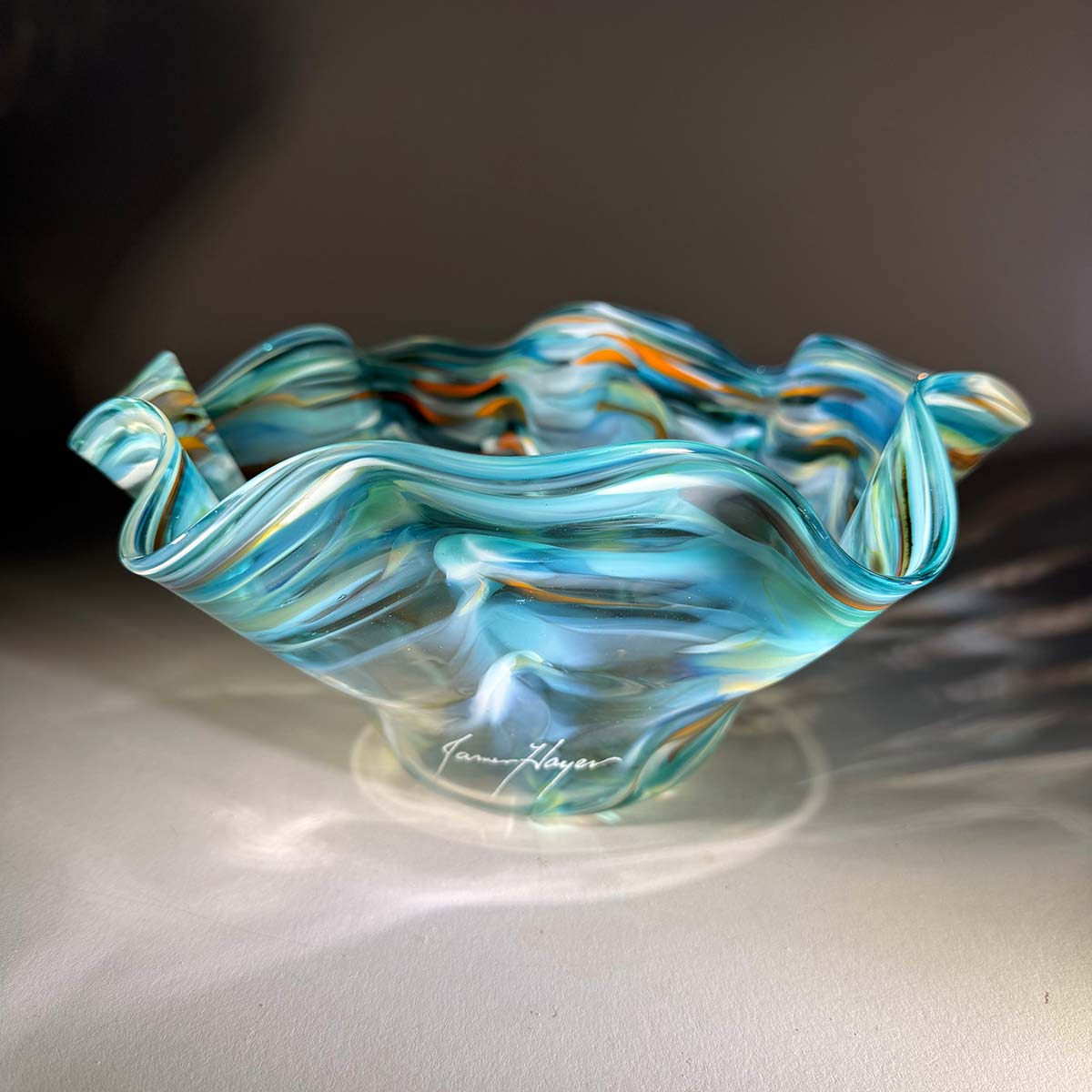
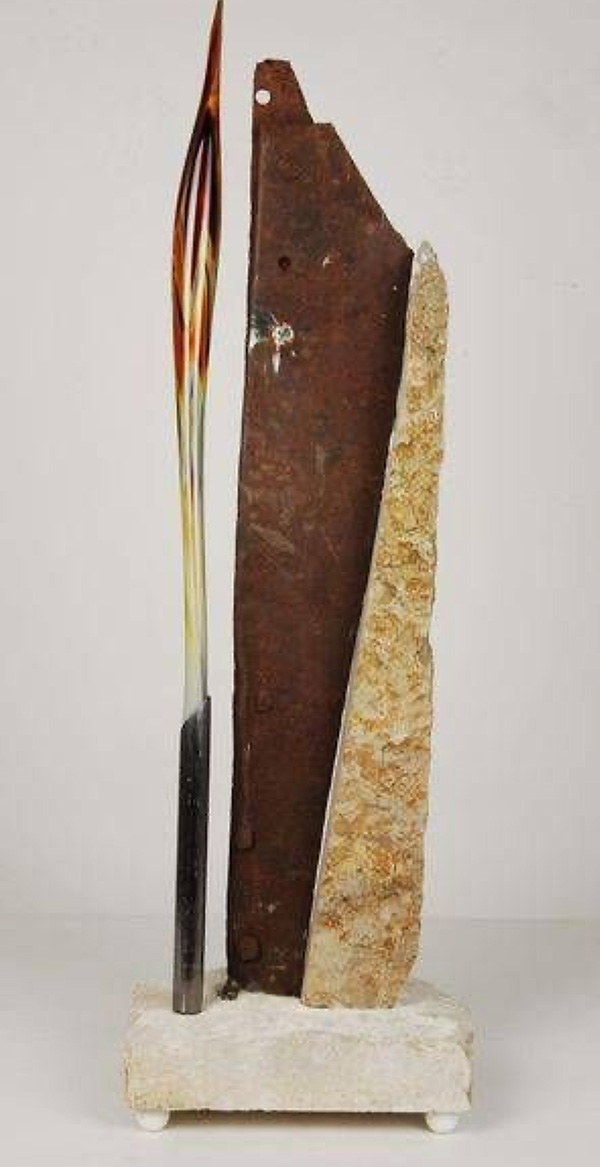
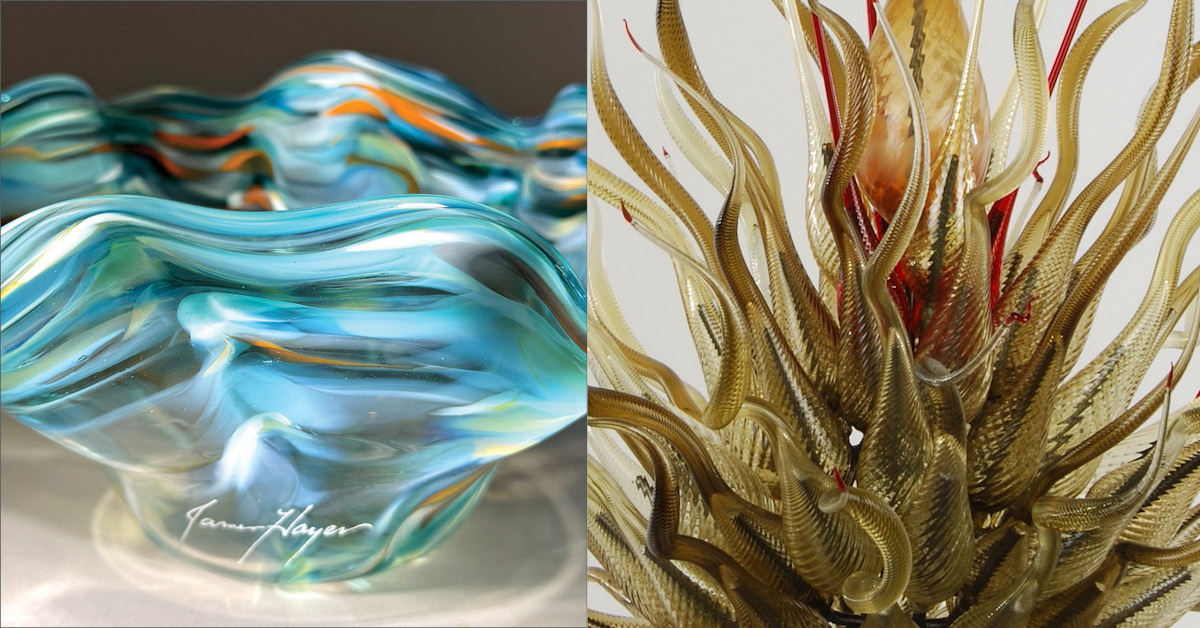
In the Same Light: Arkansas Glass in Reflection brings together the work of Ed Pennebaker and James Hayes, two Arkansas artists whose distinct journeys are joined through a shared mastery of glass. Just as sand along the Mississippi can be transformed by heat into glass, their work speaks to transformation, resilience, and the enduring relationship between nature and craft.
Though shaped by different regions of the state, both artists reflect a common vision—one rooted in Arkansas’s landscape, its waterways, and the way light reveals beauty from every perspective. Together, their work reminds us that, like water and glass, reflection has the power to connect us to one another and to the place we call home.
James Hayes was born in Pine Bluff, Arkansas, where he owns and operates the James Hayes Art Glass Company. After receiving an art degree from Hendrix College in Conway Arkansas in 1988, he searched for a new medium to express his artistic talent. Three months later he discovered glassblowing at the Arkansas Arts Center Museum School. He has studied glassblowing in Murano, Italy; Paris, France; the Glass Furnace in Istanbul; Urban Glass Brooklyn, New York; New Town Plaza in Hong Kong; and the Pilchuck Glass School near Seattle, Washington.
Hayes has had numerous solo and group exhibitions throughout the United States over the years. He was chosen for the design of the 2001 Governor’s Arts Awards in addition to designing ornaments for the James Hayes Christmas Tree in the Governor’s Mansion in 2007. He was awarded the Hendrix College Odyssey Medal in Artistic Creativity for the 2006-2007 year. Hayes was also awarded the Business of Art Award from Pulaski Technical College in 2008. His chandeliers have been showcased at many locations as they have chosen him to create works of art on permanent display. These creations can be found at The Arts & Science Center for Southeast Arkansas in Pine Bluff, The Burrow at Hendrix College, two at the UAMS Psychiatric Research Institute in Little Rock Arkansas, a large series of Chandeliers at the St. Elizabeth Edgewood in Cincinnati Ohio, one at, and the largest Hayes Chandelier to date, at 15 feet in length, was installed at Hempstead Hall at the University of Arkansas at Hope.
Hayes’ works are available to the public in boutiques, gift shops, galleries, art centers, and institutions across several states.
“I use nature, chance and my experiences as inspiration for my art glass. My art is playful, adventurous, colorful and distinctive. When I make something I always begin with the end in mind. However, during the glassmaking process the design can easily be changed. Inspiration is also drawn from color combinations in fashion, interior design and art.”
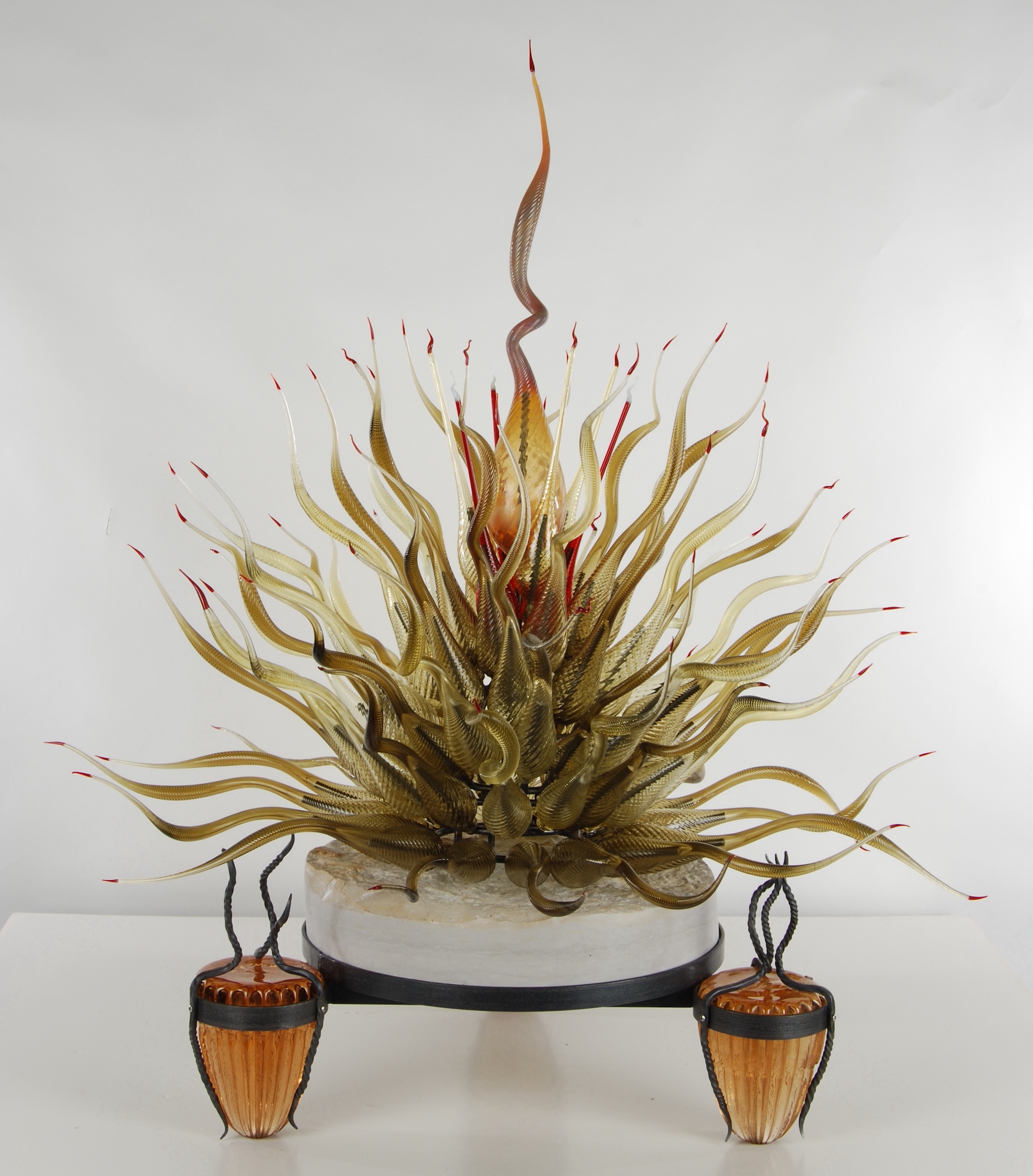
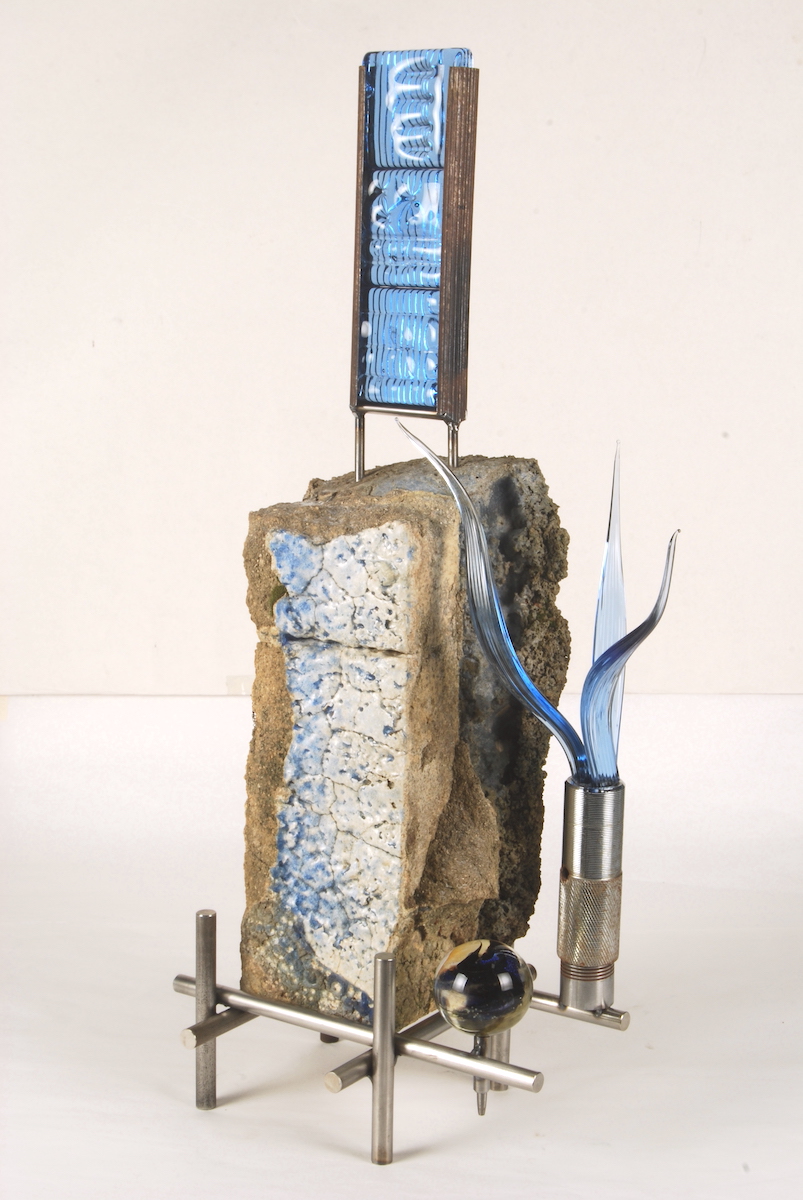
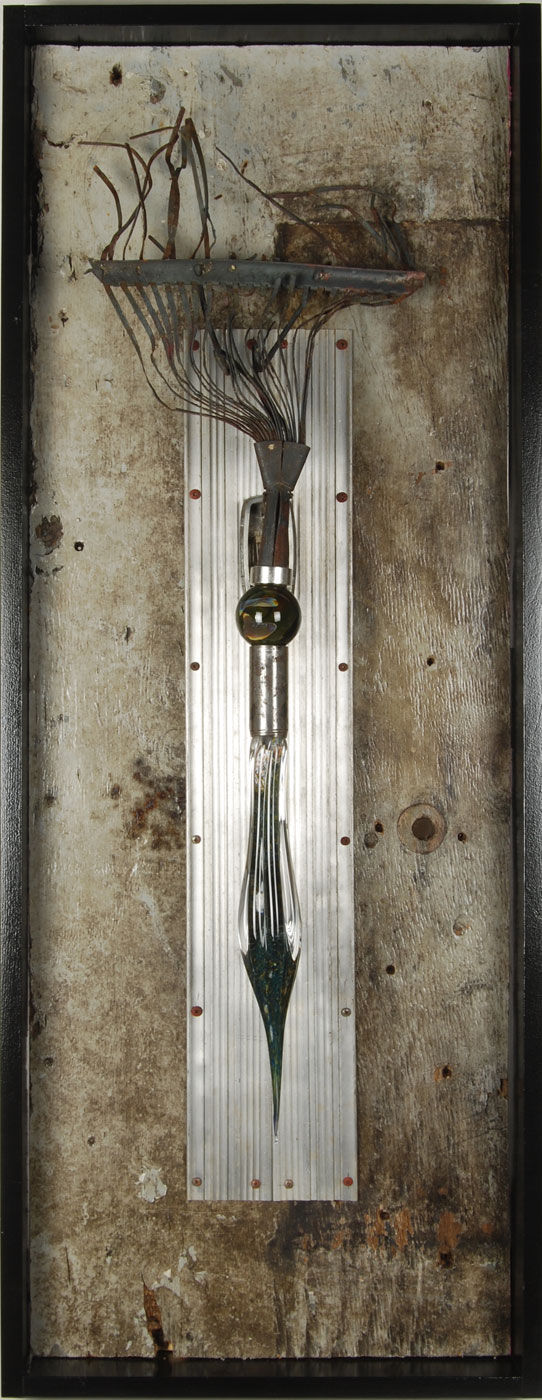
Ed Pennebaker began working with glass in 1981 and established Red Fern Glass in Clinton, Arkansas, in 1985. Since developing his signature chandelier style between 1996 and 1999, he has created more than 640 chandeliers, with lighting installations featured in public spaces and private residences.
Pennebaker’s sculptural work often reflects environmental concerns at the local, regional, and national levels. His pieces have addressed issues such as seismic activity related to fracking in and around his home region. His Chaos series responded to the aftermath of the 2008 Super Tuesday tornado that passed through Clinton, while also exploring broader themes of climate crisis and political turmoil.
In fall 2023, Pennebaker was accepted into the Arkansas Folk & Traditional Arts Apprenticeship Program, serving as a mentor to apprentice Amanda Whatley in winter/spring 2024. The grant was renewed, allowing him to continue mentoring Whatley in 2025. He also welcomes other glassblowers into his studio, including Kaden Myers, who has worked with him for several years.
Pennebaker’s lighting has received the “Excellence in Lighting” award from the Philadelphia Furniture and Furnishings Show. His sculptural work has been included in the Annual Delta Exhibition and in temporary installations at the Decatur, Georgia, Artwalk; the Bentonville, Arkansas, trail system; the Olathe, Kansas, Public Sculpture Program; Arkansas Arts Center FountainFest; and the Clinton Presidential Library.
All of Pennebaker’s glass is made by hand in his studio. He works primarily in blown glass, while also incorporating casting and fusing techniques.
“I work in an inspiring location. The Ozarks are known for their beautiful scenery and abundant flora and fauna.”

Interviewed and photographed by Cheryl Cohen, 1976 The Pine Bluff Women’s Center, Inc.
Maeleen Clay Arrant was the supervisor of elementary schools in Pine Bluff until 1969. In 1932 she taught in an experimental school for African Americans, sponsored by the Southern Education Foundation, to study the benefits of having qualified teachers in a low-income area. Arrant often talked about freedom and racial prejudices, and her belief in hard work. Her activism continued after her retirement in 1969.
In 1974, Arrant served on the governor's Committee for the Integration of Institutions and Higher Education. She remained active in Delta Sigma Theta Sorority, Incorporated and as an alum of the University of Arkansas Pine Bluff. Maeleen Arrant was also a member of the Arkansas American Association of University Women. In 1980, the Arkansas Education Association named a scholarship in her honor. Maeleen Arrant died in 2000.

Interviewed and photographed by Rebecca Kilmer, 1976 The Pine Bluff Women’s Center, Inc.
Chanah Reid Foti was the youngest person interviewed at the age of 7. When asked about work, she said, “I’d like to be a carpenter. I’d build a house.” When asked, what do you think a poor person is? She said, “Somebody who doesn’t have any friends and can’t get along with people.”
Chanah lived in Arkansas throughout her early twenties. She then moved to California and became a drug and alcohol counselor with her husband, Pierre La Merre. Chanah passed away in 2017.

Interviewed and photographed by Cheryl Cohen, 1976 The Pine Bluff Women’s Center, Inc.
Mrs. O.G. Dawson (Ethel B.) worked for the sharecropper program National Council of Churches in Lincoln County, and encouraged people to vote and pay their taxes. Dawson discussed racial segregation, the Student Non-Violent Coordinating Committees activities in Pine Bluff, and facing and challenging sexual discrimination as a working African American woman. “I’ve always been accused of being outspoken. I don’t mean any harm. I never meant any harm, but at the same time, I’m just telling the truth.”
In her later years, Ethel Dawson worked with the Jefferson County Voters Association and the League of Women Voters. She remained an active NAACP member and strove to get Blacks hired at the Jefferson County Court House. Ethel Dawson died in 1984.

Interviewed and photographed by Judith D’Elena, 1976 The Pine Bluff Women’s Center, Inc.
June H. Davis was the secretary to the principal and counselor, at Altheimer High School. She discussed the growth of Altheimer, Planter’s Gin, and Altheimer’s Gin Company, and the mechanization of farming. Davis appreciated living in a small town and the tradition and heritage of the area.
June Hale Davis graduated magna cum laude in 1982 with a fine arts degree from the University of Arkansas-Pine Bluff and enjoyed camping, hiking, and antiques. She passed away in 2011.

Interviewed and photographed by Ra Heilman, 1976 The Pine Bluff Women’s Center
Annie R. Zachary, “When you say “true grit” well you got to have it f you are going to survive in this world as a woman.” Following her husband’s death, she was a widow, mother, politician, public worker and farm manager struggling to gain respect in the farming industry because of her gender. Zachary was a force to be reckoned with, and in 1969, Governor Rockefeller appointed her the first Black person, male or female, to serve on a Governor’s board.
In 1977, she married Lester Pike, and in 1979, she helped establish National Teachers’ Day. In 1985, the Arkansas Education Association recognized her many years of volunteer service. From 1999 to 2001, she served on the Arkansas Tobacco Control Board. Her husband died in 1997. In 2002, the Phillips County Road 125, which runs through Zachary farmland, was renamed Annie Zachary Pike Road. As of 2019, Pike still resides on the family farm in Marvell.

Interviewed and photographed by Cheryl Cohen. 1976 The Pine Bluff Women’s Center, Inc.
Geneva Byrd was the daughter of a share-cropper, beginning a life of hard work as a little girl. Part of her income, in 1976, is from selling eggs. Fresh eggs are popular because, “They say it makes better cakes and the bread looks better.” Her time behind a plow, hauling firewood, chopping cotton, and raising chickens led to independence for Byrd, “ I could live without a husband good as anything because I know how to work. Been working all my days!”
Geneva Byrd worked for the Kahn and Freeman family as a housekeeper until she retired. She enjoyed gardening and caring for animals. Byrd was preceded in death by her first husband Herman Sloan and second husband John Byrd--to whom she was married at the time of his death. Byrd passed away at the age of 94 in 2012.

Interviewed and photographed by Cheryl Cohen, 1976 The Pine Bluff Women’s Center, Inc.
Mildred Laureles had been a postmistress since 1947. Lamenting on the disappearance of her town of Snow Lake, “Well I’ve seen it goin’ down an awfully lot. When I came here, you see, there was two stores, and two gins, and a number of sharecroppers’ families. Lots of people. Now the stores is gone, the gins is gone, and most of the people’s gone.”
After serving as Snow Lake’s postmistress for over 30 years, Mildred Laureles retired in 1981. After retirement, Laureles moved to West-Helena, where she ran a gas station and enjoyed watching soap operas in her free time. In August 1990, Laureles was diagnosed with lung cancer. She passed away in 1992.

Interviewed and photographed by Arleen Olsen, 1976 The Pine Bluff Women’s Center, Inc.
Emma Merlo was a mother, wife, gardener, and greenhouse manager of what was formerly known as Woodstock Plantation. Merlo found joy in the solitude of the Delta and described Pine Bluff as quiet and peaceful with few disturbances.
Emma Merlo sold Woodstock Plantation after the death of her husband Claude Merlo in 2002. As of 2021, Merlo is 90 years old and resides in Belton, Texas, with her daughter, Claudia Croswell, and son, Joseph Merlo.

Interviewed and photographed by Cheryl Cohen, 1976 The Pine Bluff Women’s Center, Inc.
Ora Brown, owned rental properties and Ora Brown’s Beauty Salon. Small business ownership was one way to earn income in an era of few career opportunities for minorities.
Ora Lee Brown was born in 1906 and died in 1982.

1976 The Pine Bluff Women’s Center, Inc.
Idella Kimbrough, was a reporter for the Lincoln County newspaper for 26 years. Kimbrough’s work within the community and church earned her an Outstanding Citizenship Award. She recalled her grandmother growing up in slavery working as a cook, and the hardships and injustices of the era.
Idella Kimbrough was born in 1906 and died in 1986.

Interviewed and photographed by Cheryl Cohen, 1976 The Pine Bluff Women’s Center, Inc.
Lucyle Cantley was interviewed at her antique and book store. She was in business for 49 years. Listed in Who’s Who in Arkansas and in Distinguished Americans of the South, Cantley opened her first store at 17 years old. Cantley recalled the obstacles women faced obtaining business loans and needing fifteen times more collateral than a man.
Lucyle Cantley died in 1978.

Interviewed and photographed by Cheryl Cohen, 1976 The Pine Bluff Women’s Center, Inc.
Jessie Tidwell, was a cook and housekeeper. She began cooking with her mother at an early age. Tidwell recalls her mother’s home remedies for colds and other ailments. She remembered the Flood of 1927 and its impact on her family and neighbors. Tidwell stated that the event brought together Whites and Blacks in shared hardship.